
YOUR PARTNER IN RENEWABLE ENERGY
Solar and battery systems for commercial buildings, from survey to operation
We design, install and maintain the system — on one roof or across the portfolio.
Solsjekk
See what the roof can give – in two minutes
Enter the address of the building and you get a proposed system, annual output and investment. Warehouse, workshop, office or retail building.
No sign-in. We read the roof from aerial imagery and the Norwegian Mapping Authority’s elevation model. The figures are an estimate before a site survey. The tool is in Norwegian and searches Norwegian addresses. Open Solsjekk.
- Panels installed
- 400,000+
- MW Peak
- 188
- Years of solar in Norway
- 20+
BENEFITS
Solar on commercial property has never been more profitable. Strong projects can pay for themselves in a record-low 4-7 years.
-
Returns from day one
The moment the panels are connected to the inverter you start cutting your electricity costs, and you can sell the surplus.
-
Incentives and grant schemes
Enova has support schemes where solar can form part of an energy measure on a commercial building. Rates, requirements and deadlines change, so we check what applies to your building.
-
Higher property value
A solar installation can increase the value of your commercial building.
-
A long-term investment
Solar installations have an expected lifespan of 25-30 years and deliver a solid return over time.
-
Tax relief and depreciation
Take advantage of the tax benefits and depreciation available on solar energy investments.
“We see Solcellespesialisten as a pioneer in the Norwegian solar industry. They are flexible and knowledgeable, and we are always confident that they will find a good solution.
They also pass on knowledge and expertise to their partners, something we as a customer have benefited from during our own start-up phase.”
“We are very pleased with the way the work was carried out and with Solcellespesialisten, who were professional throughout the whole process from start to finish. We got the support and advice we needed, and the project manager also attended internal meetings with our foreign owners.
The project was delivered efficiently and tidily, all within the agreed timeframe. All in all a great project and a supplier we would recommend!"
“In our opinion, Solcellespesialisten holds excellent control over their full value chain, which is important for us in terms of ESG matters."










projects
A selection of our projects
We have delivered solar installations on commercial buildings, schools, logistics and warehouse buildings – from 29 kWp to 3,703 kWp.
-
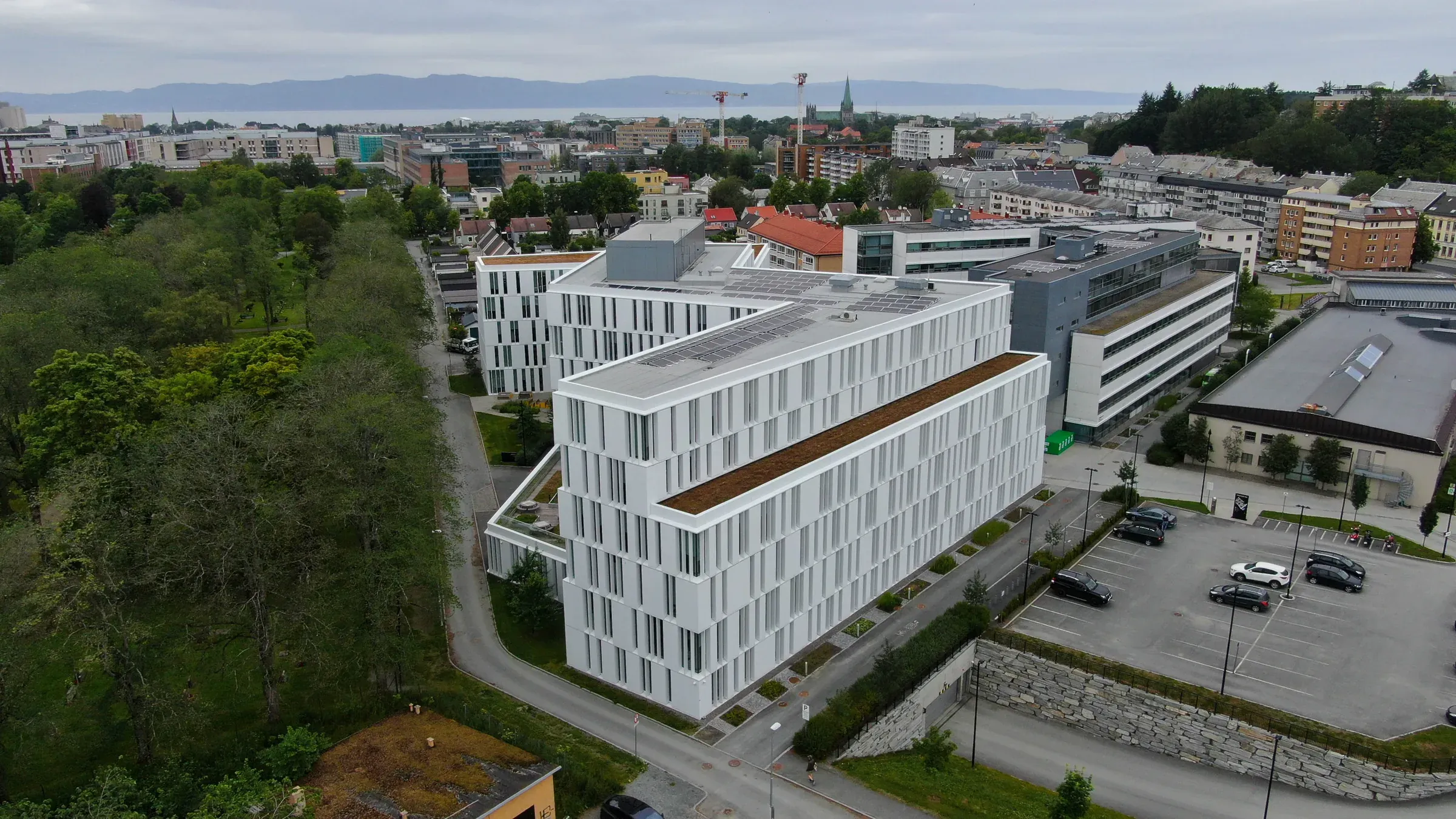
Abels gate 9
Trondheim
-
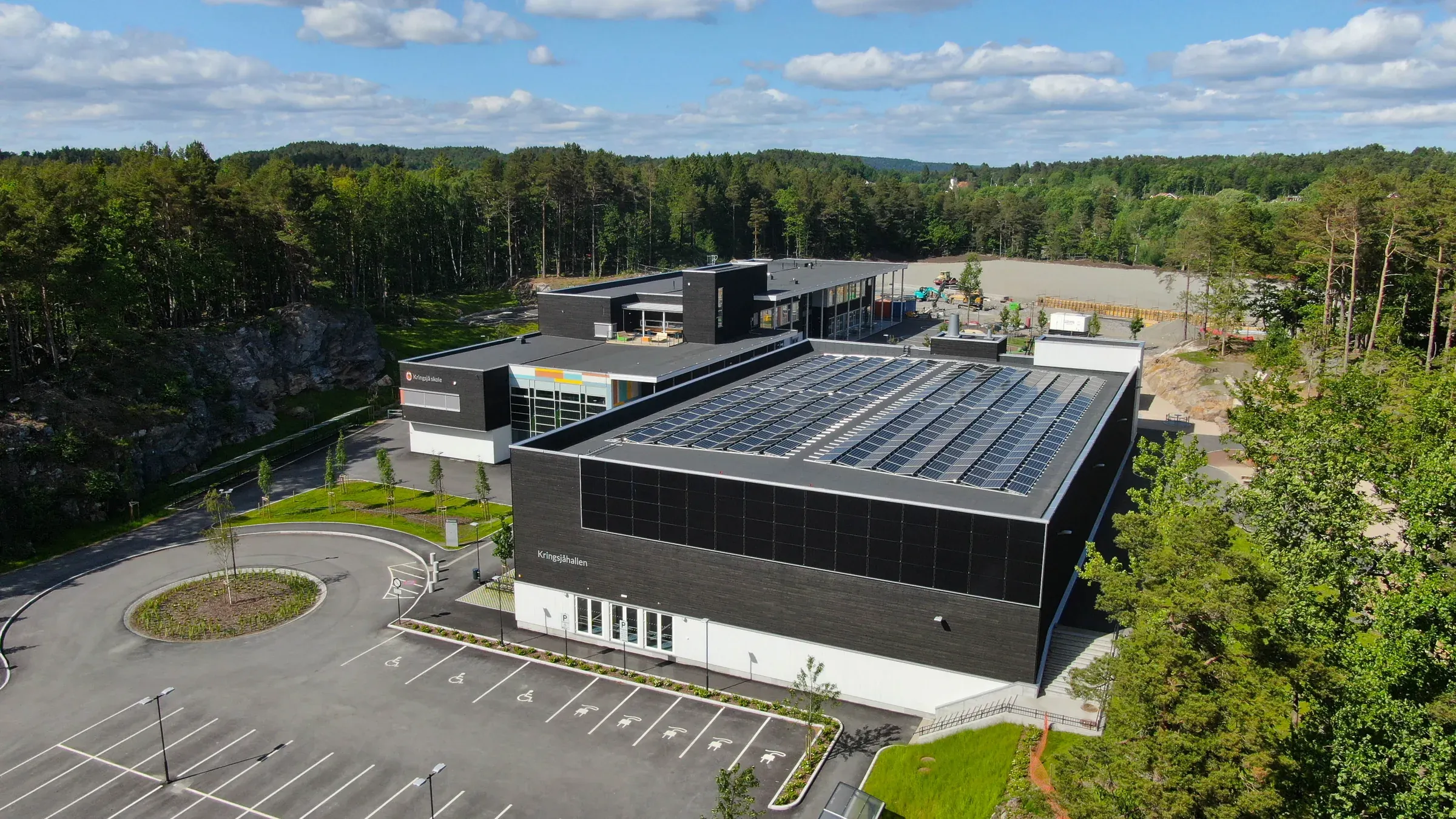
Kringsjå skole
Kristiansand
-
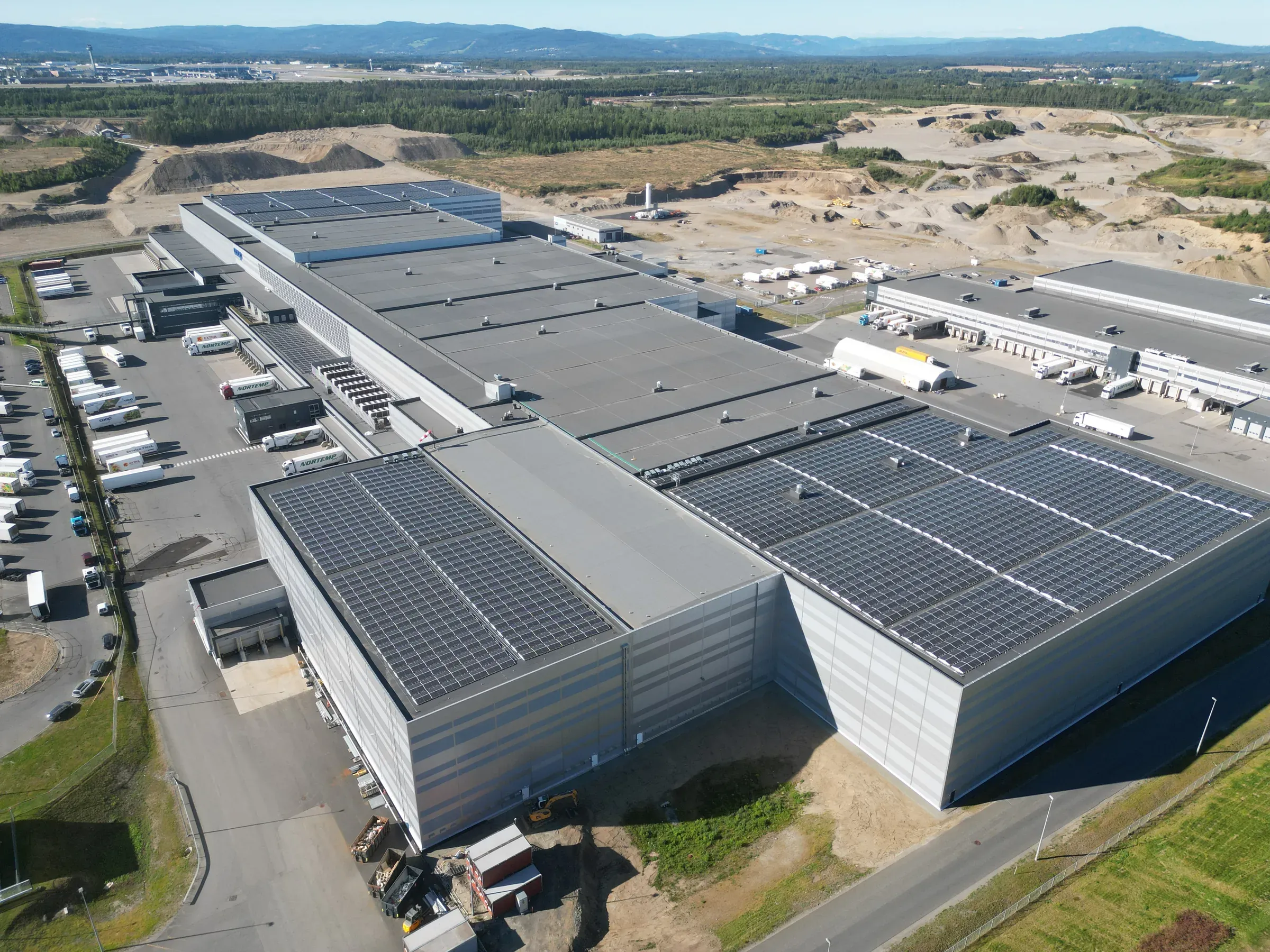
Coop Logistikksenter (CLog)
Jessheim
-
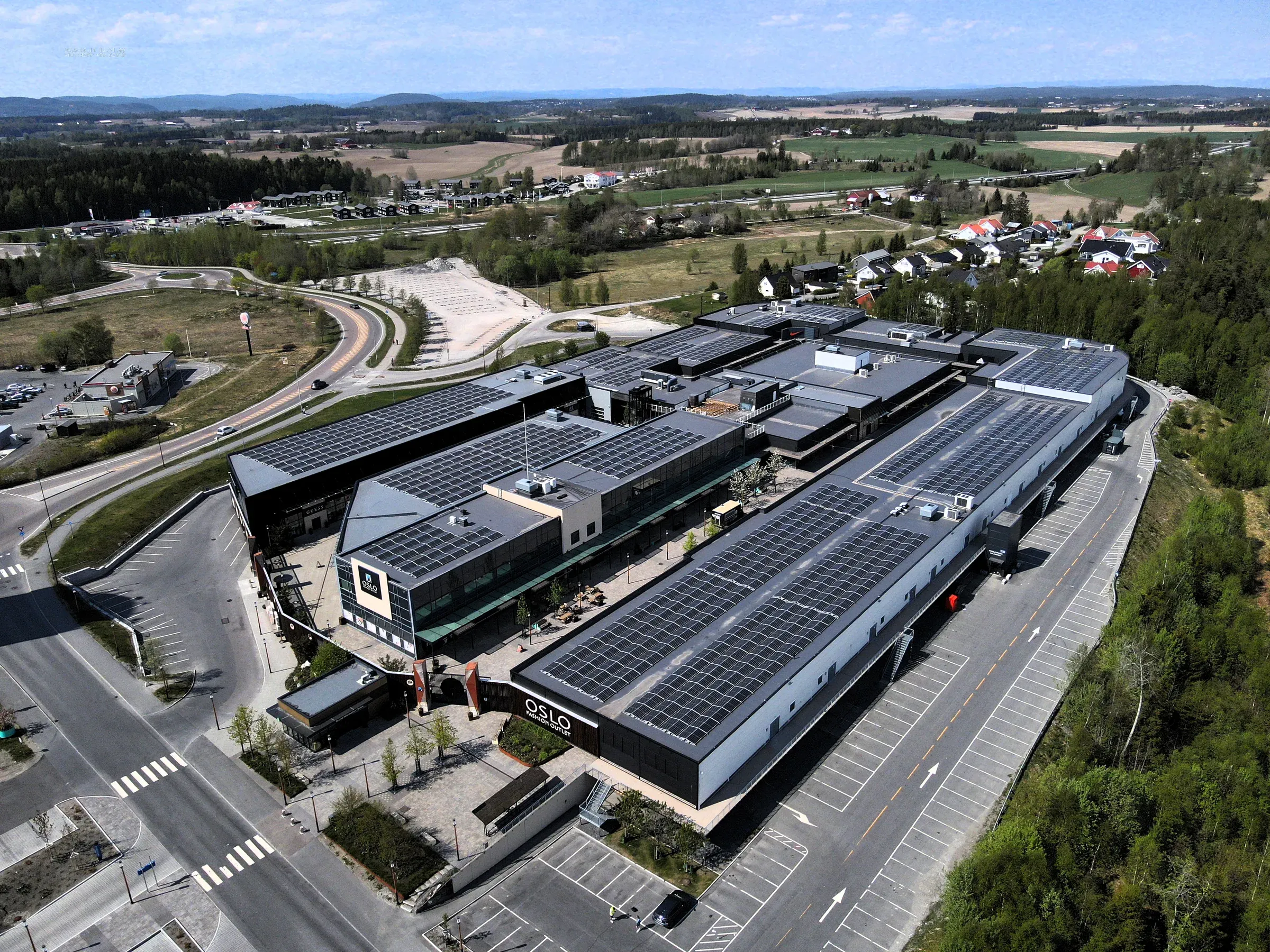
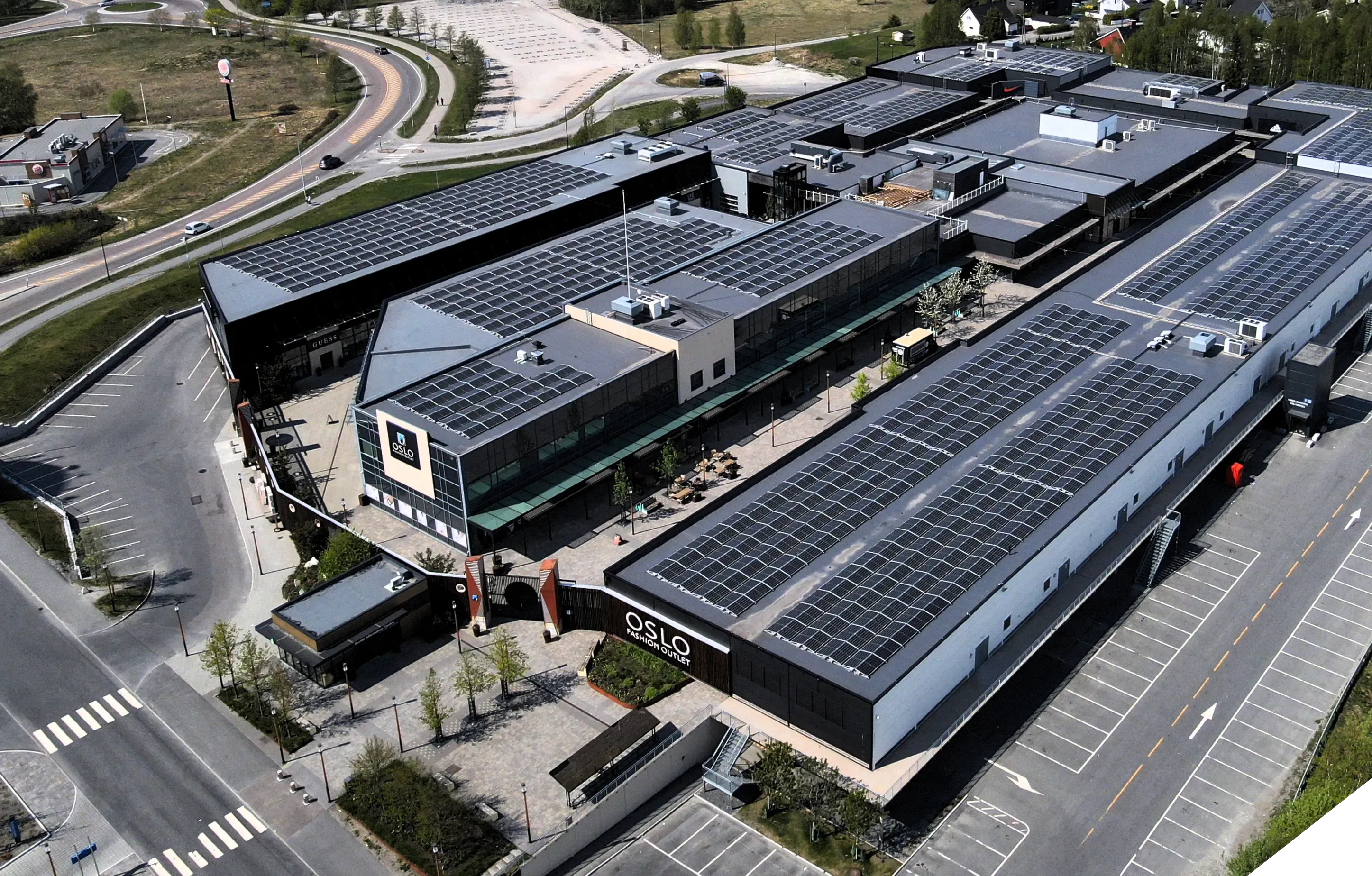
Oslo Fashion Outlet
Vestby
-
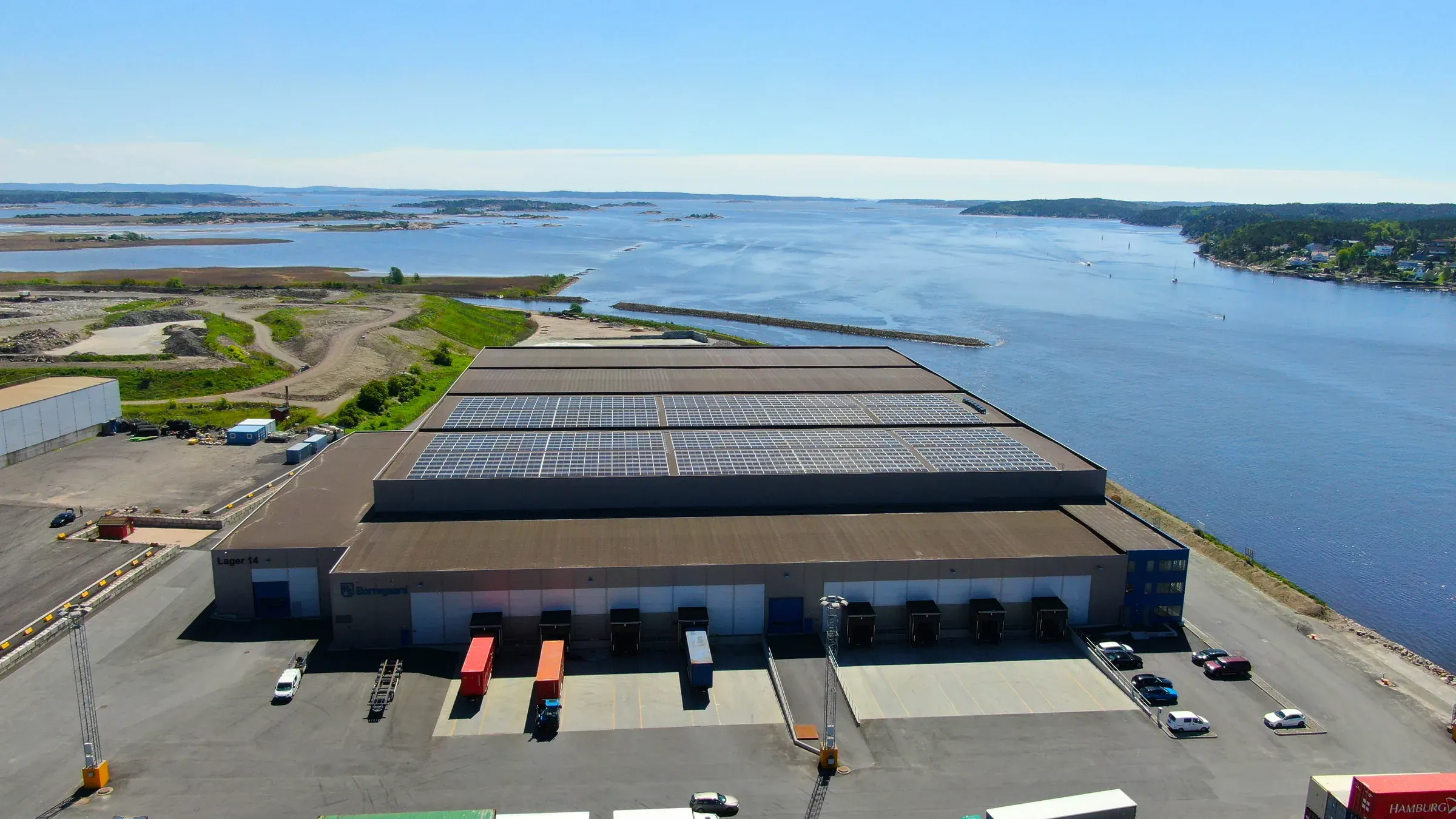
Borg havn lager
Fredrikstad
-
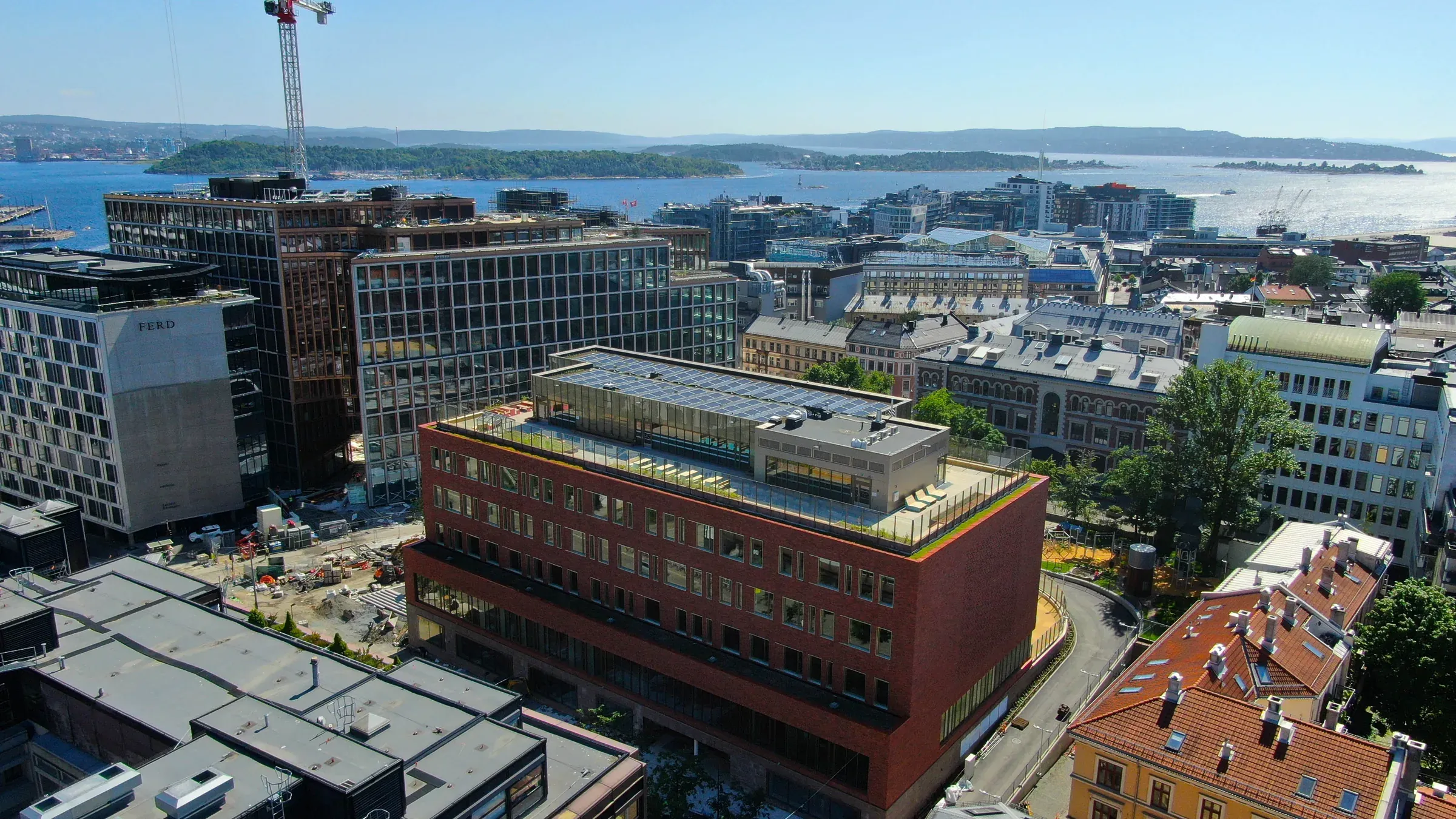
Ruseløkka Skole
Oslo
-
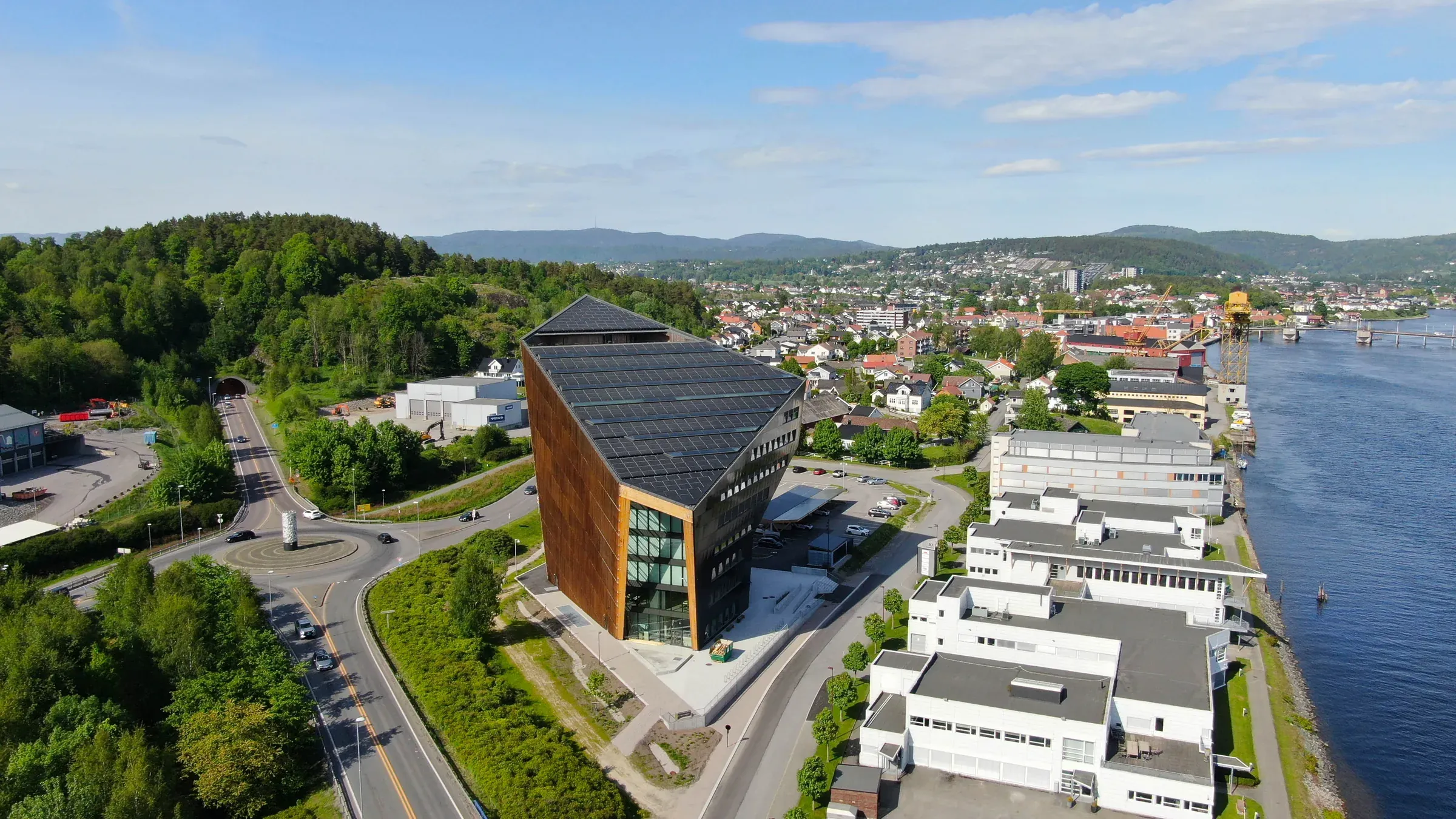
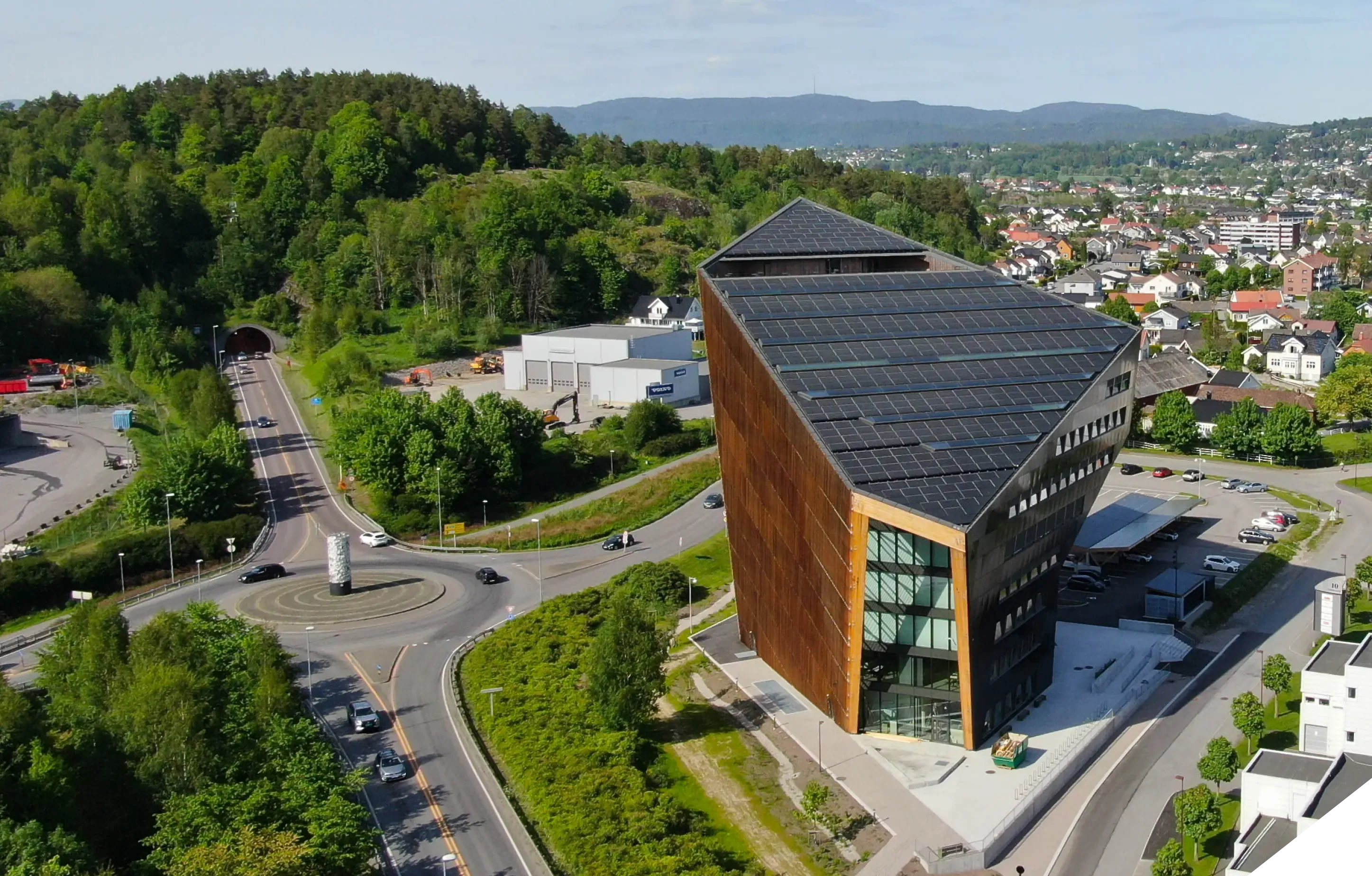
Powerhouse
Porsgrunn
-
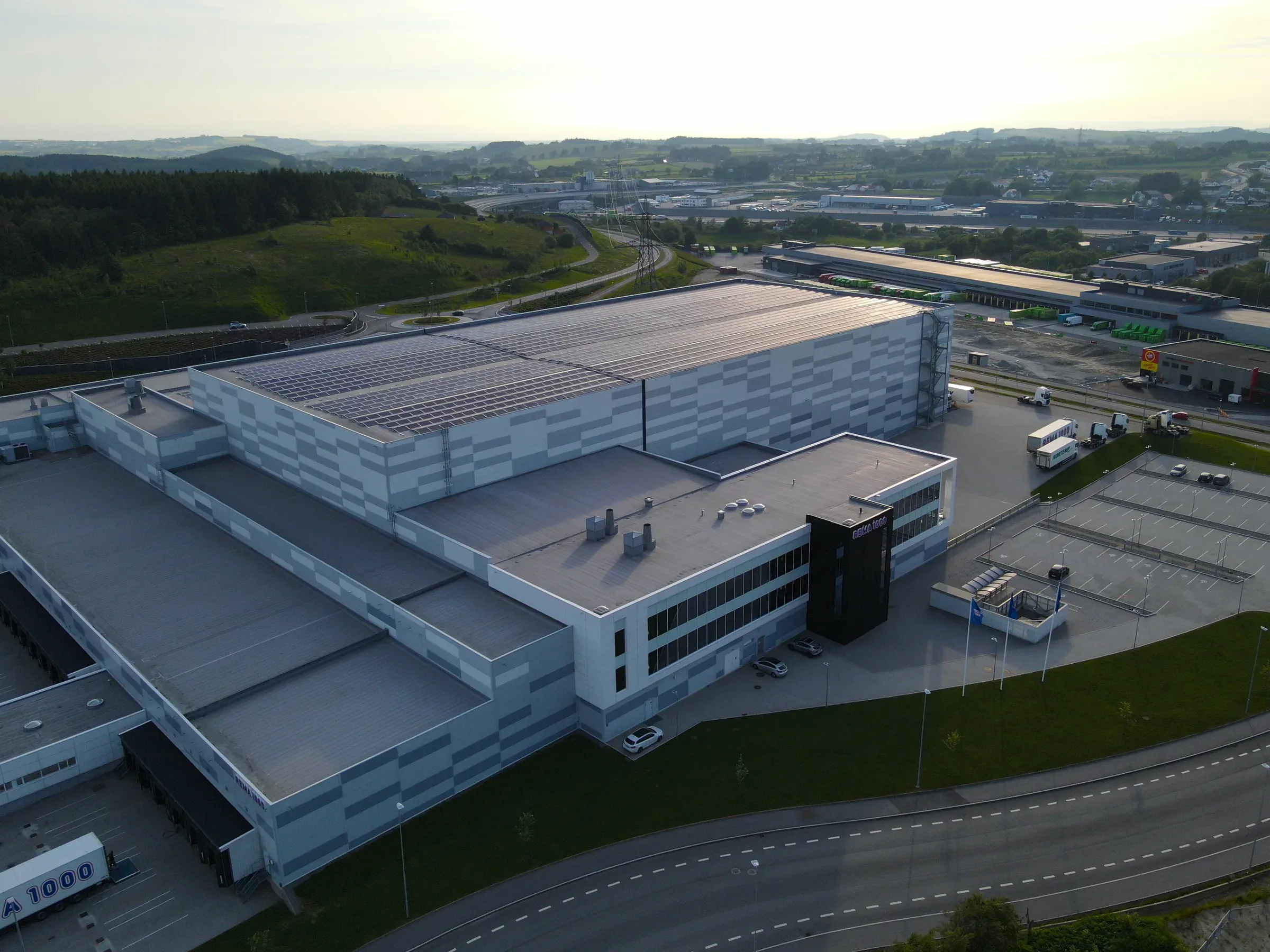
Rema1000
Sandnes
-
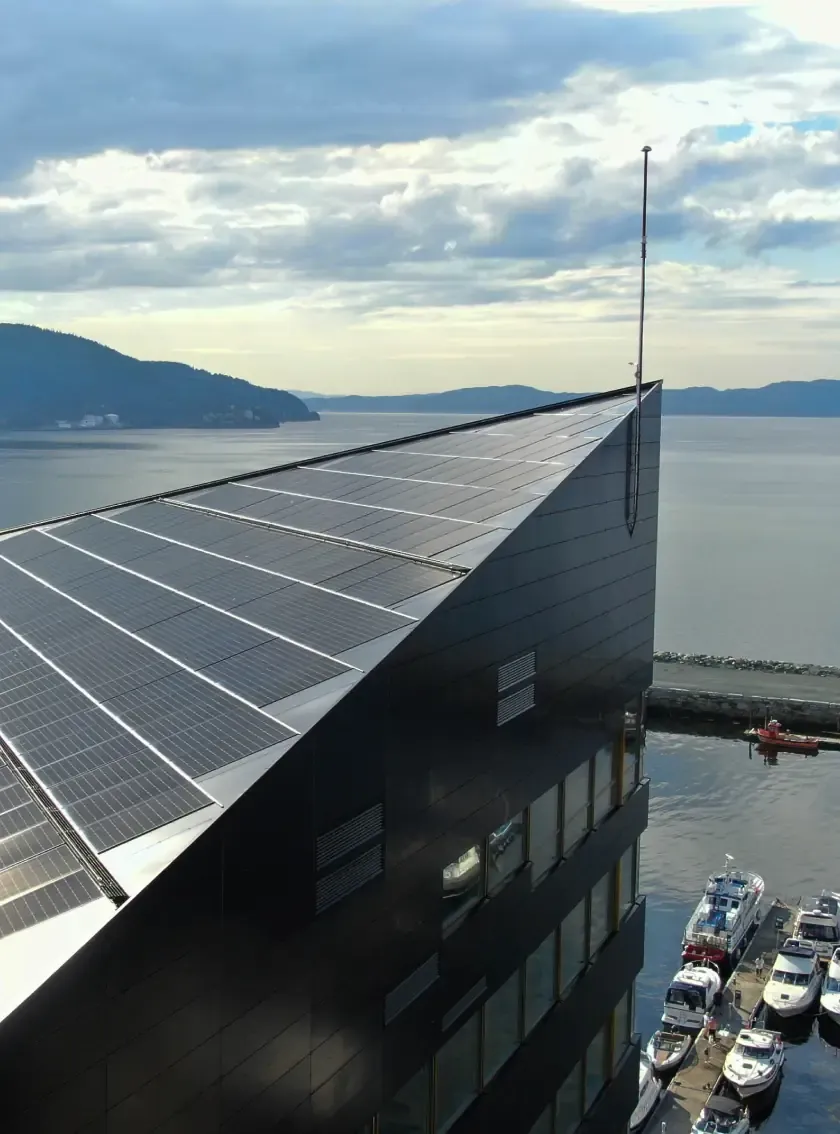
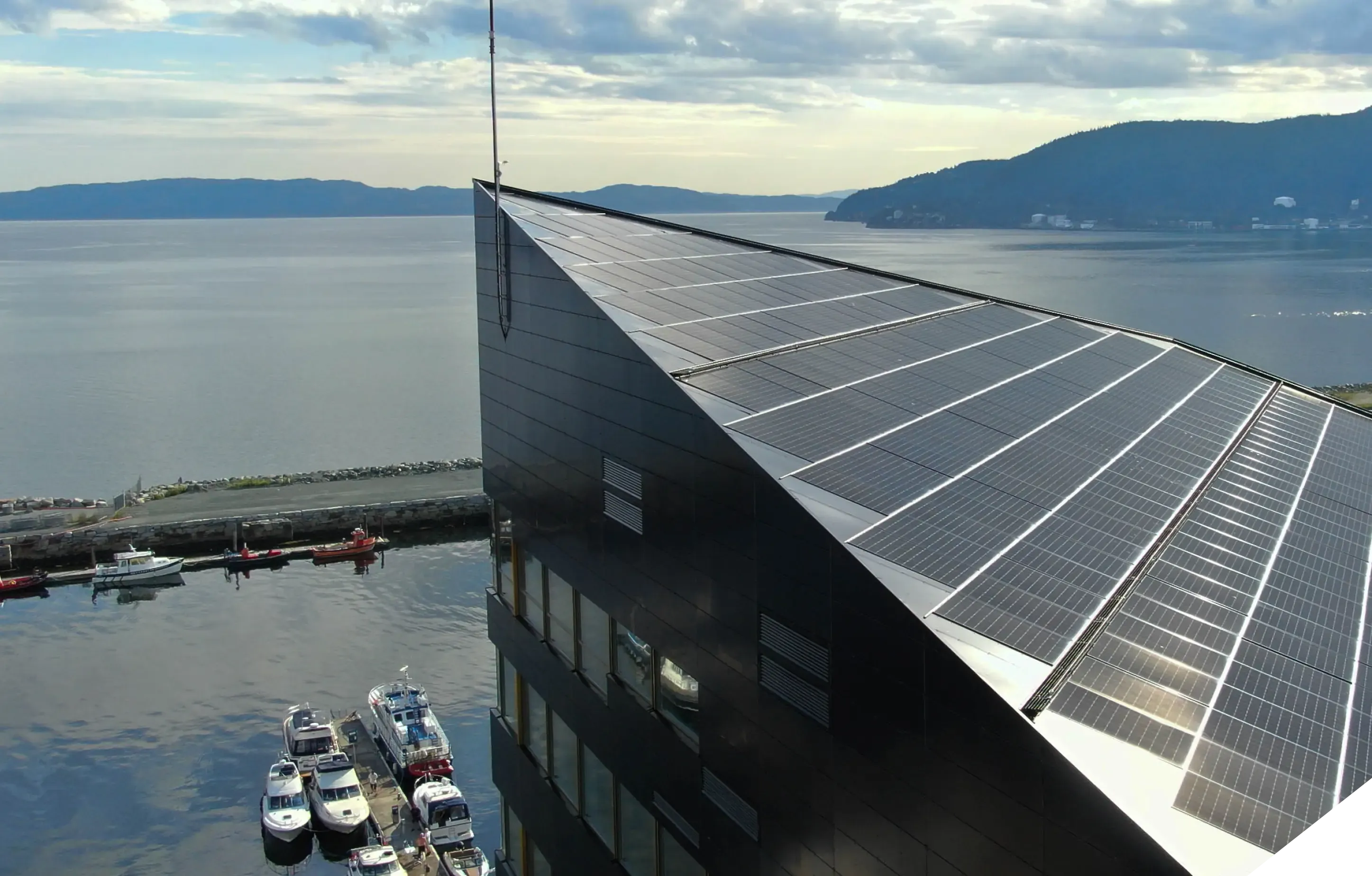
Powerhouse Brattørkaia
Trondheim
-
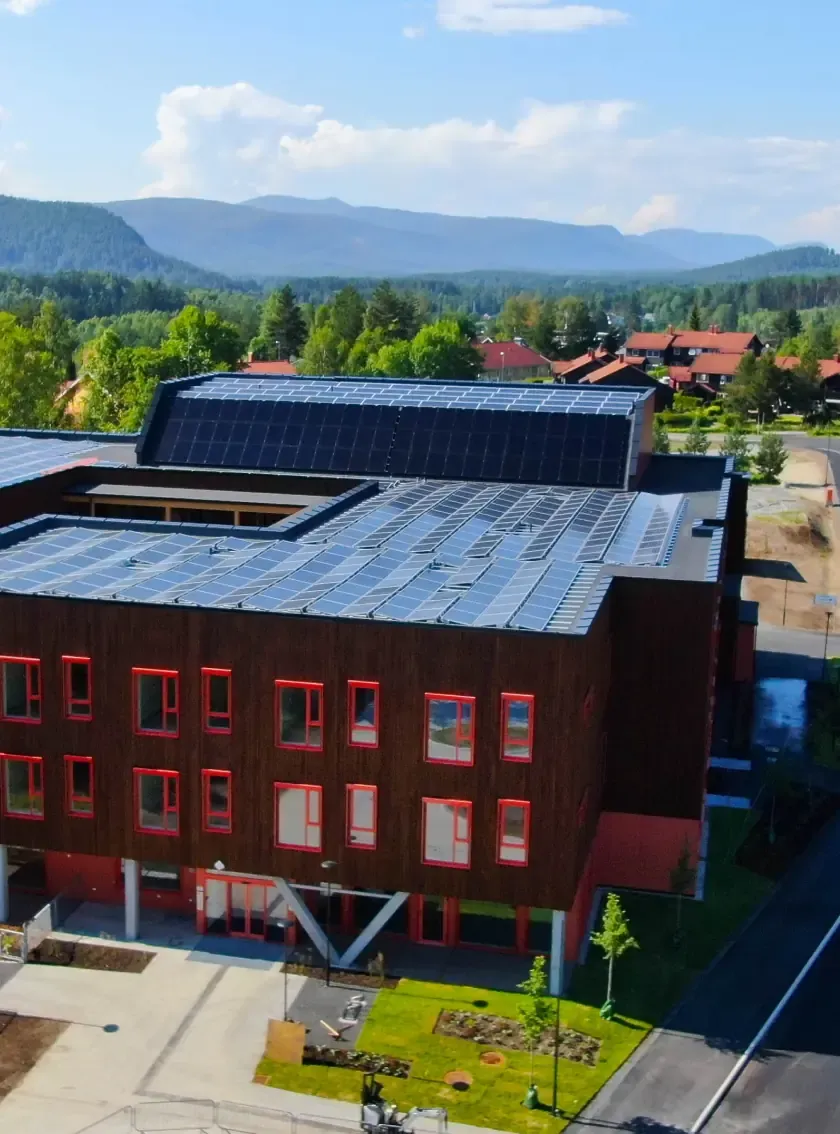
Edvardsløkka omsorgssenter
Kongsberg
-
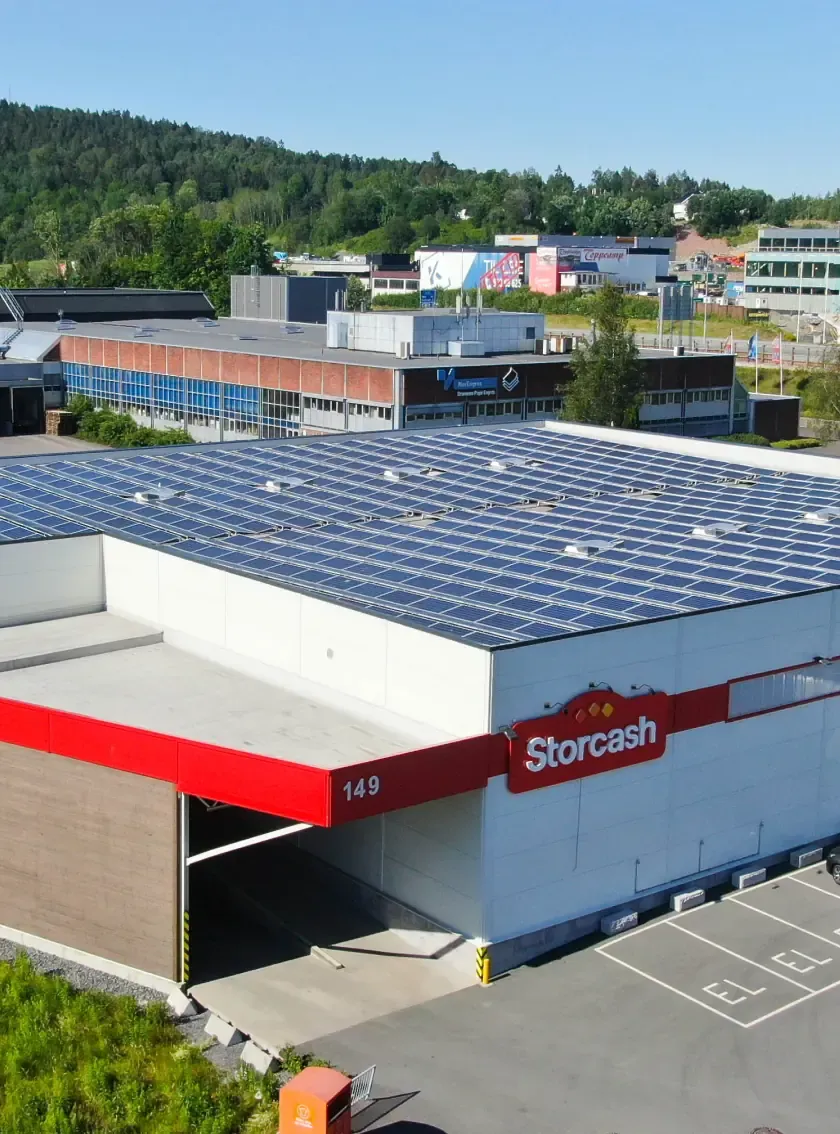
Buskerud Storcash
Drammen
-
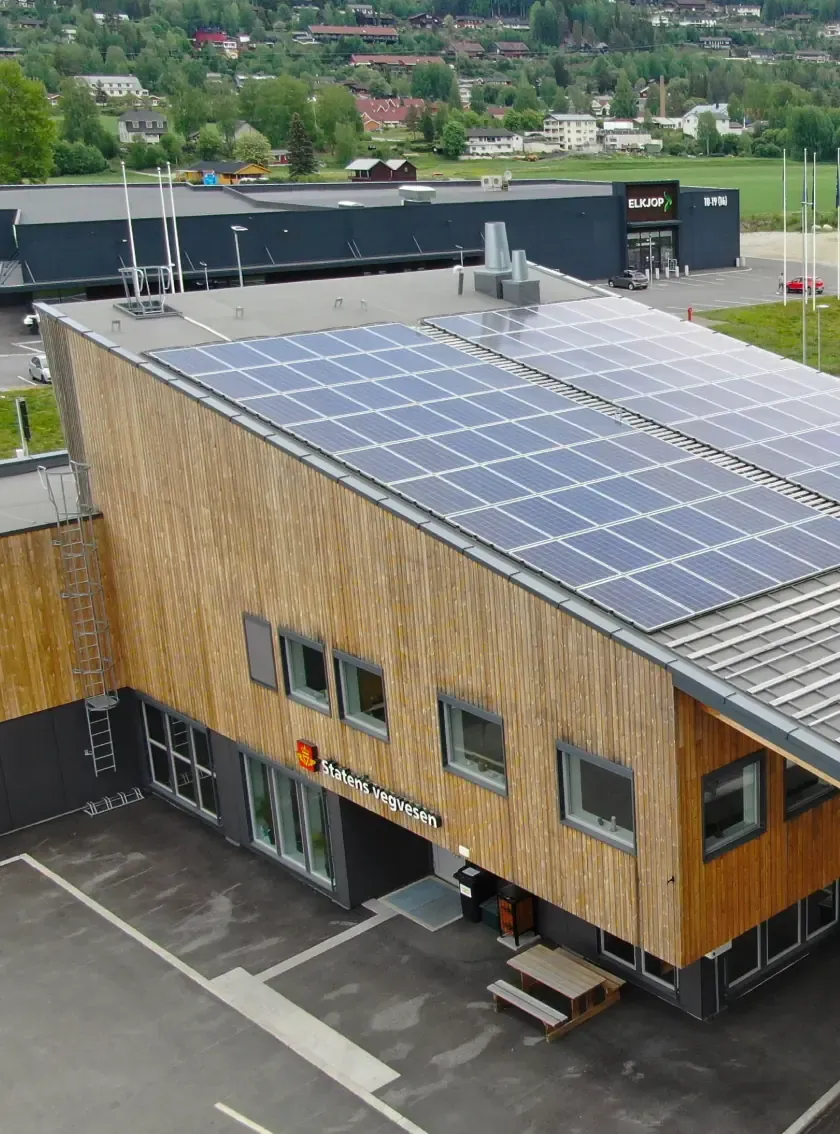
Statens vegvesen
Gol
How it works
Solcellespesialisten is with you every step of the way
Solcellespesialisten tailors the solution to your buildings and combines it with streamlined delivery at scale.
-

Step 1
Get in touch
Let us arrange a first meeting to explore the potential of your building.
-

Step 2
Design and engineering
The engineering is done by our own engineers. They calculate snow and wind loads to Eurocode 1 with the Norwegian national annexes and size the installation to the consumption in the building. We are listed in the Norwegian electrical undertakings register, in StartBANK and in Achilles, and our staff sit on the NEK committee for photovoltaic solar energy systems (NK 82).
-
Step 3
Construction
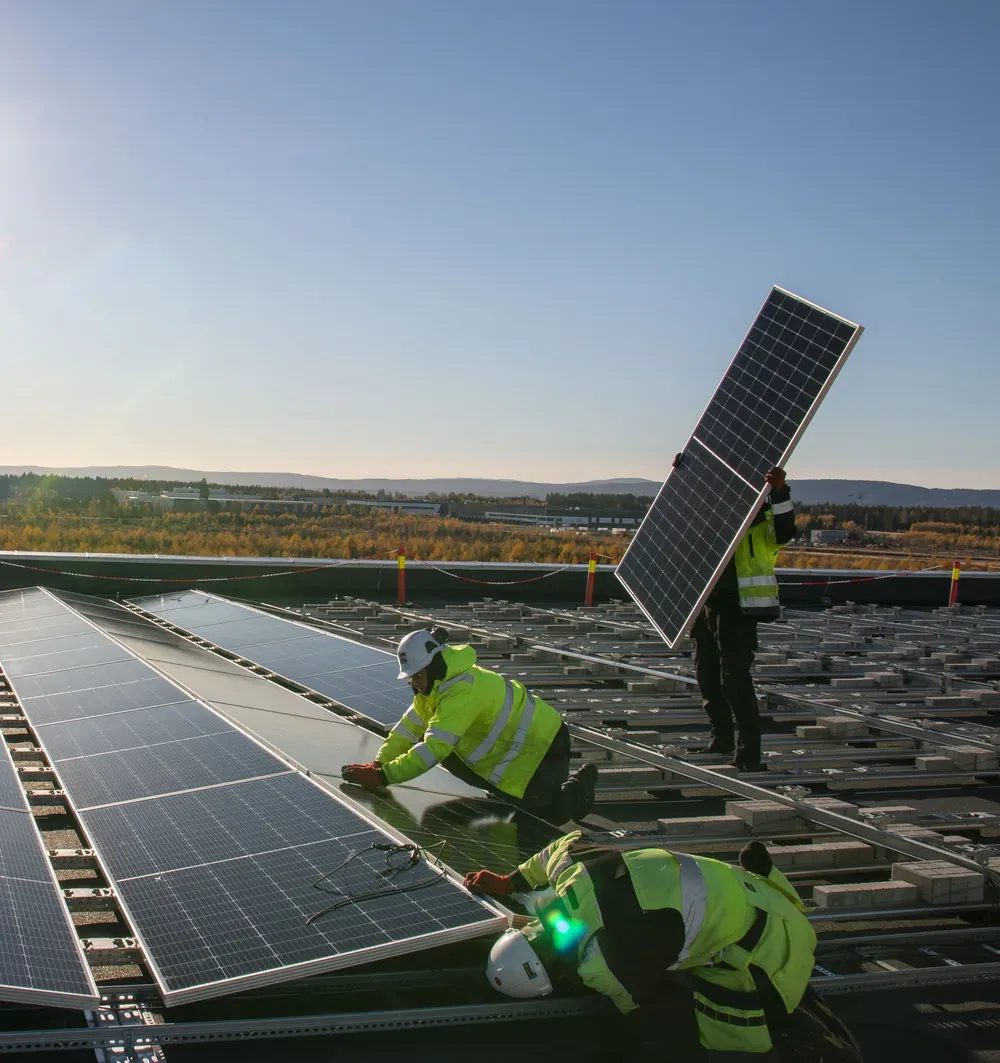
You get your own project manager, with you from the first day on site to the moment the panels are connected to the inverter.
-
Step 4
The road ahead
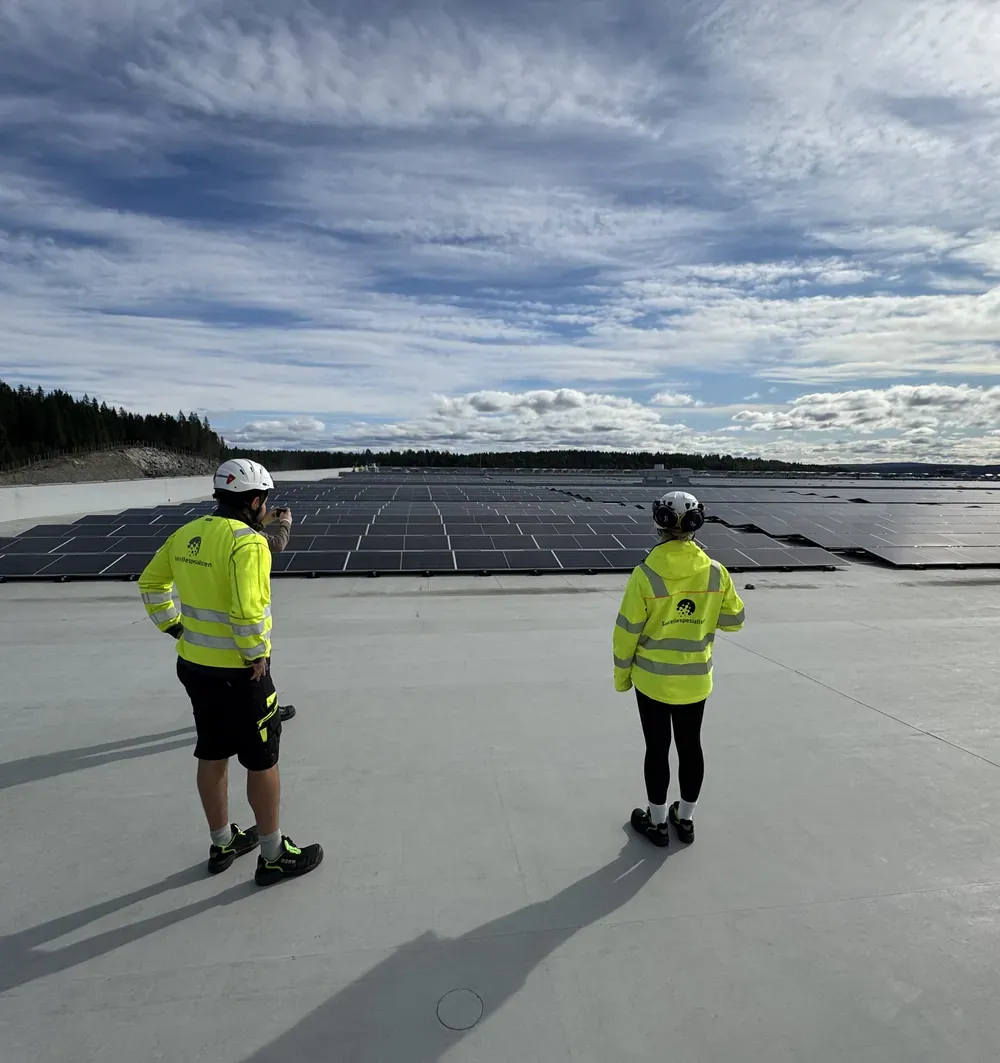
After installation a dedicated team follows up to make sure the system performs at its best and that you are satisfied. This can include a service agreement.
ROOF TYPES
Solar solutions for every roof
Solcellespesialisten supplies solar panels to suit any roof. We have the expertise and the technology to maximise your energy potential.
-
Pitched roofs
Optimised for efficiency
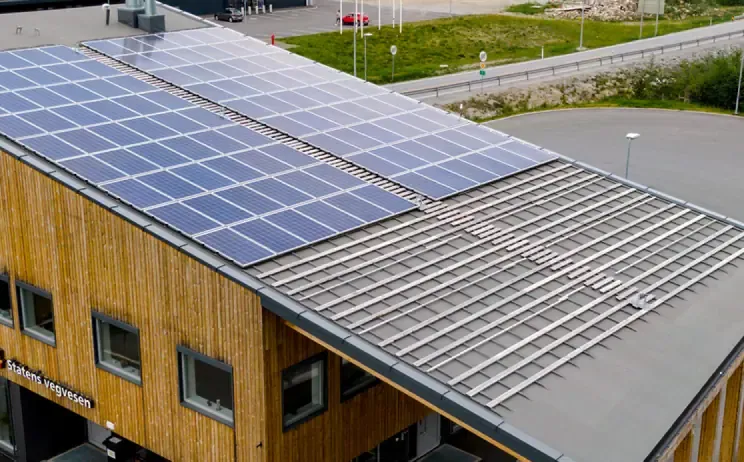
Panels for pitched roofs sit flush with the angle of the roof to capture as much sunlight as possible through the day. Straightforward to install, and good to look at
Best suited to: commercial buildings and farm buildings with a pitched roof.
-
Flat roofs
Making the most of the available space
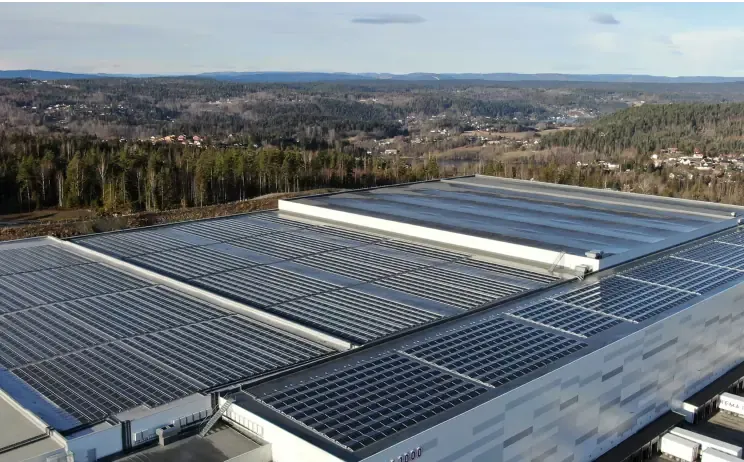
For flat roofs we offer solutions that optimise both space and energy output. Our panels can be mounted at a precise angle to catch the sun to best effect, and are designed to withstand a wide range of weather.
Best suited to: commercial, warehouse and logistics buildings, and housing co-operatives.
-
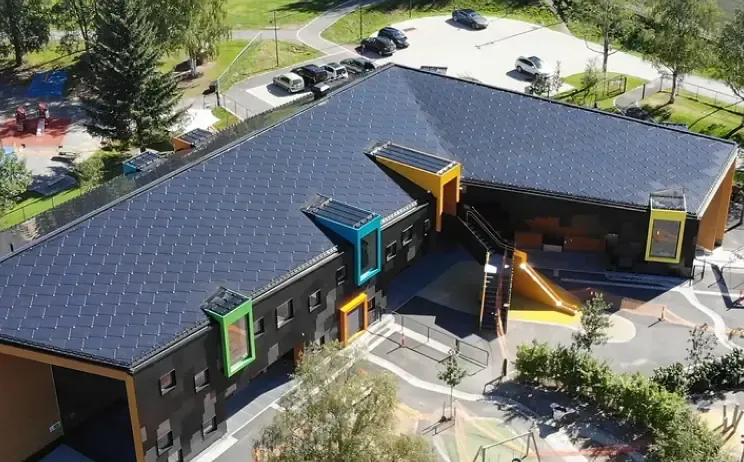
Building-integrated roofs
The energy roof of the future
Building-integrated photovoltaics (BIPV) are the future of solar energy. These systems replace conventional building materials in the roof or facade and give a seamless, attractive finish that generates clean energy.
Best suited to: new-build projects or refurbishments that want to combine modern architecture with green technology.
-
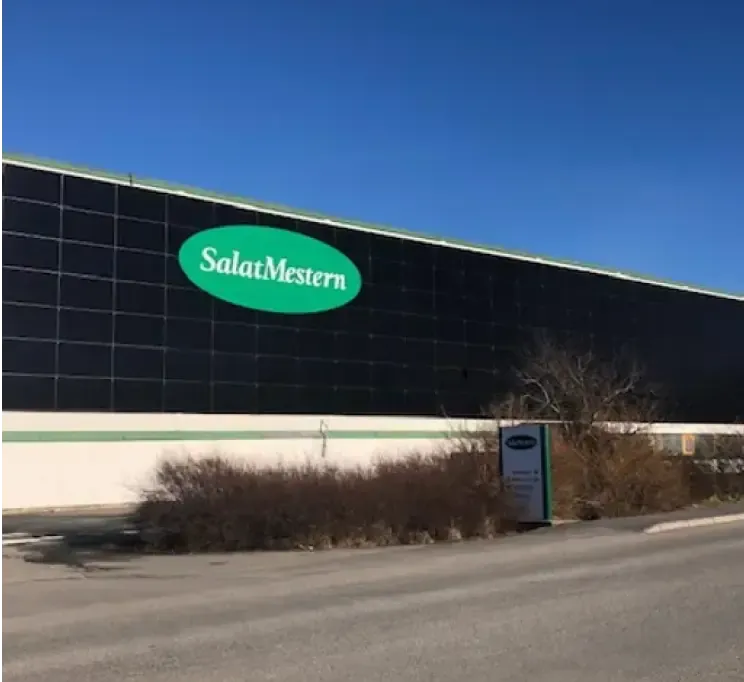
Facade-mounted solar
Strengthen the building’s environmental profile
Panels on a facade are more visible than panels on a roof, so they can help underline the building’s environmental credentials.
A facade takes just as many panels per square metre as a pitched roof, but annual output is lower. The advantage of a facade array is winter performance: it produces more through the winter months than an equivalent array on a flat roof, both because a roof array can be covered in snow and because a steeper panel angle works in your favour at that time of year.
Best suited to: greater output through the winter months
esg
Sustainability in every cell.
Solcellespesialisten does not only prioritise delivering first-class solar solutions; we are also deeply committed to sustainability and ESG.
Through a commitment to ethical trade, responsible operations and secure supply chains, Solcellespesialisten intends to be the sustainable choice every time. We carry out thorough supplier assessments and are certified as a Miljøfyrtårn.
With Solcellespesialisten you choose a partner dedicated to a greener and fairer world.
ABOUT US
Why choose our expertise?
We have spent the past two decades perfecting solar energy for the Norwegian market.
As specialists, our mission is to deliver confidence, innovation and real value to our customers. We are building tomorrow’s energy systems – on experience from more than 400,000 panels installed since 2005.
-
Our goal
To offer high-quality, cost-saving renewable energy solutions to commercial buildings, agriculture, housing co-operatives, jointly-owned properties and solar parks, built on renewable technology.
-
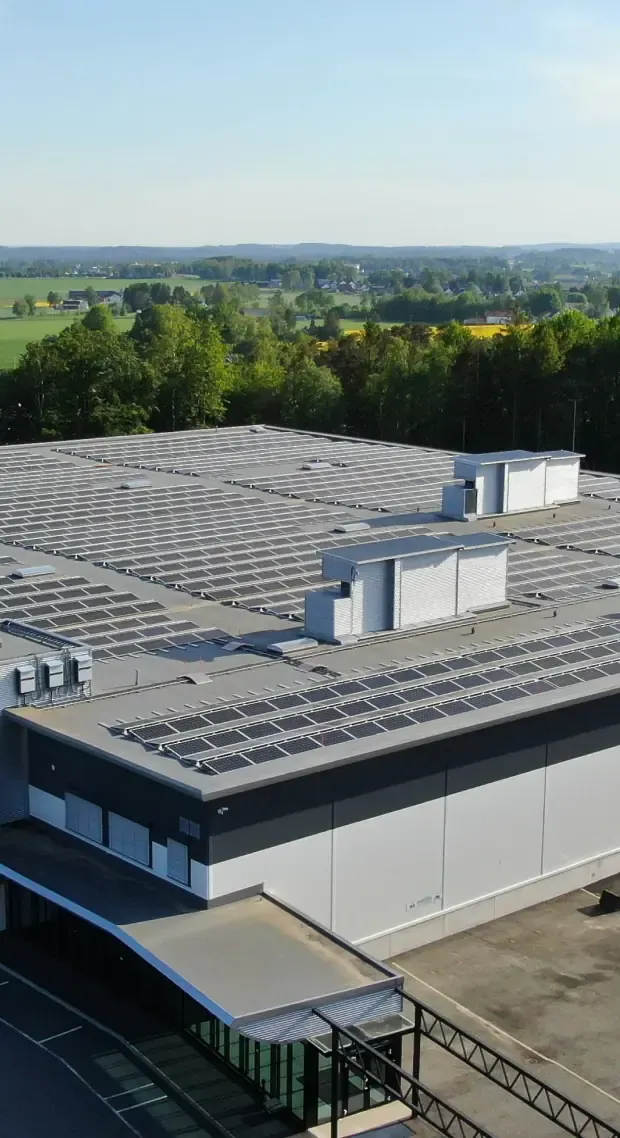
Our vision
To save the climate with renewable energy by becoming a leading contributor to a world where all energy consumption comes from renewable sources.
“The project was delivered efficiently and tidily, all within the agreed timeframe. All in all a great project and a supplier we would recommend!”
More we deliver
Battery, service and charging
-
Solar for businesses (in Norwegian)
What a solar installation gives the business, how large it should be and what the roof must carry. With a checklist for choosing a supplier.
-
Battery and storage
The capacity charge is based on the single highest hour your building draws each month. A correctly sized battery cuts that hour – and can store your solar output and offer capacity in the reserve markets.
-
Service agreement
Annual inspection, drone thermography and remote monitoring with alarm handling. We also take over installations we did not build ourselves.
-
Charging installations
A fast charger sets the monthly peak on its own. We design charging installations where a battery absorbs the draw, so the grid connection does not have to be reinforced.
FAQS
Questions and answers about solar panels for commercial property
…or can you not find what you are looking for?
Contact us
Installation: before, during and after
-
01. Where can I check the solar conditions on the roof?
You can check the conditions on your roof by searching for your address at solkart.no. For commercial buildings, housing co-operatives and jointly-owned properties, farms and solar parks, you can also contact our advisers at bedrift@solcellespesialisten.no. We are always happy to come out for a site survey.
-
02. Which side of my roof is best suited to solar panels?
South-facing roof surfaces usually give the highest annual output, peaking around the middle of the day. East- and west-facing surfaces generate more in the morning and the afternoon, which spreads production more evenly across the day. In our own PV calculator on solkart.no, a roof in Oslo gives around 1 006 kWh per kWp a year when the surface is pitched 25 degrees to the south, against around 800 kWh per kWp on a flat roof with panels at 10 degrees to the east and west (run on 17 September 2026, P50, 5% system loss, snow and soiling losses included). Shading from neighbouring rows and the surroundings is not included in the figures. Total annual output is somewhat lower, but east/west can suit you particularly well if your consumption is heaviest early or late in the day. This holds for any type of building, whether a housing co-operative, a barn or an industrial building with a flat roof. You get the figure for your own roof in Solsjekk.
-
03. Can I have solar panels on more than one roof surface?
In principle you can have panels on several roof surfaces. Technical requirements place certain limits on the number of panels per surface. The more surfaces involved, the more expensive it can become, as additional inverters may be needed.
-
04. Does a solar installation need permission from the local authority?
It has to be assessed building by building. A solar energy installation is a building services installation under the Norwegian Planning and Building Act (pbl. § 20-1 bokstav f). Installing or altering one within a single dwelling unit or fire compartment counts as a simple installation and is exempt from the permit requirement, but on a commercial building the array often spans several fire compartments, and then the exemption does not apply. The same goes if the building sits within a conservation area or close to the shoreline or a railway line. The new exemption for solar energy installations that applies from 1 July 2026 covers small houses and certain detached buildings – not commercial buildings. We help you check this with the local authority before installation.
-
05. Does the installation have to be registered with the grid operator?
Every solar installation must be registered with the grid operator. We take care of that process. All we need from you is your meter number. The role your building takes on the grid depends on how much the installation can export to the grid. As long as the installation exports no more than 100 kW, you are registered as a plus customer, the formal term for a prosumer – a customer who both uses and produces electricity – and you are paid for the surplus exported to the grid. If it exports more, you become a producer, with separate terms for feed-in and settlement. We establish which category your building falls into before the system is designed.
-
06. When will I get a date for the installation?
Once the quote is confirmed, the project manager agrees the installation date with you. When it can happen depends on the scope of the project, delivery of materials and any applications to the local authority and the grid company.
-
07. What should I do if the equipment is damaged?
If the goods are marked “registrert skade” (damage recorded), this is a routine note from the supplier and something we will follow up. In most cases only the packaging is damaged and the contents are unaffected. If you can see that the goods are extensively damaged, please contact us as soon as possible on 45 72 87 80.
-
08. Who installs the panels for Solcellespesialisten?
Solcellespesialisten has its own installation teams, experienced in solar installation and with a strong background in both the electrical and the structural side of the work. We have the capacity to install around two in three projects with our own employees. The rest are carried out by regular subcontractors we have worked with for many years.
-
09. When is the system commissioned?
We usually have our own teams for connecting the system to the grid. They normally come once the roof work is finished. You will receive a separate email with the connection date.
-
10. Do the solar panels need maintenance?
Solar panels are essentially self-cleaning. The installation should still be inspected in line with the manufacturer’s recommendations. The largest installations should have an on-site inspection several times a year, the smallest every three years. An inspection can include a visual check from ground level, plus a look at whether the cabling is secured and protected. If the panels are unusually dirty even after rain, they can be rinsed down gently. Avoid brushes and snow clearing, as these can scratch the panels and void the warranty. For commercial installations we offer a service agreement with an annual inspection.
Product and warranty
-
01. What is an inverter?
An inverter converts the direct current (DC) from the solar panels into the alternating current (AC) that the grid uses. Its size depends on the output of the installation. Cables run from the inverter both to the array and to the consumer unit, which may be inside the building. An inverter can make some noise while generating, and there are also several fire safety requirements governing where it can go. Our installers will help you find the best position for it when they fit the panels.
-
02. What kind of solar panels does Solcellespesialisten use?
We supply solar panels in different sizes and power ratings from several manufacturers, and choose the panel to suit each project. Today we use panels from LONGi, Tongwei, AIKO and JA Solar. We weigh performance, the roof structure and how the building is used to find the best solution.
-
03. How big is a solar panel?
Panel size varies from manufacturer to manufacturer and generally increases with the output of the panel. Smaller panels are usually around 1.7 metres tall, while larger panels for industrial buildings can be up to 2.4 metres. We choose the panel to suit each project.
-
04. How much snow can the panels take?
The panels cope with a great deal of snow. In areas with heavy snowfall we fit an extra rail beneath the panels so that the snow load cannot break them. The project manager assesses this before installation.
-
05. How much wind can the panels take?
The wind load is calculated for every project to NS-EN 1991-1-4 with the Norwegian national annex. The calculation takes in the reference wind velocity for the municipality, the terrain category where the building stands and the height of the building – a low warehouse inside an industrial estate and an office block standing alone by the fjord do not get the same load. On a flat roof one value for the whole surface is not enough: the standard divides the roof into zones, and uplift along the roof edge and in the corners is many times higher than in the middle. That is where ballast is increased or the installation is fixed mechanically. We determine the terrain category from map data rather than by judgement – see how we do it.
Costs and funding
-
01. What is included in the price of a turnkey solar installation from Solcellespesialisten?
A turnkey installation from us includes everything: grid notification, design and engineering, installation, protection, commissioning, AC connection and final documentation.
-
02. Who buys my surplus electricity?
The surplus is sold to your electricity supplier under the agreement you have with them, and the terms vary between suppliers. If the installation can export more than 100 kW to the grid, you are no longer a plus customer but a producer, and selling the power requires a separate agreement. We establish which category the installation falls into before it is designed.
Output and monitoring
-
01. Can I choose whether the electricity the panels produce is used in the building or exported to the grid?
No. Electricity produced by the panels always goes first to whatever is drawing power in the building. If the panels produce more than the building consumes, the surplus is exported to the grid automatically.
-
02. Do solar panels generate all year round?
Solar panels always generate something as long as they are not covered and daylight is falling on the surface of the panel. In winter there is generally little sun, and snow will cover the panels. We have calculated the seasonal split in our own PV calculator on solkart.no, run on 17.09.2026: in Oslo 97% of the annual output falls between March and October on a flat roof with panels at 10° facing east and west, and 93% on a south-facing roof pitched at 25°. Across the country the share ranges from 91% (Stavanger, south-facing 25°) to close to 100% (Tromsø, flat roof) – the further north, the shorter the season. The assumptions are the same as in our calculator: 5% system losses, crystalline panels, free-standing mounting, a P50 solar year, terrain horizon, and snow and soiling losses included. Shading from neighbouring rows and the surroundings is not included in the figures. You get the figure for your own roof in Solsjekk.
-
03. How can I monitor the output from the panels?
All of our inverters come with output monitoring in the form of a phone app. The electrician who commissions the system will set this up and show you how to use the app.
-
04. What happens to generation if there is a power cut on the grid?
With a grid-connected inverter, a power cut on the grid causes the inverter to stop supplying electricity. Nor will the panels cover your own consumption while the grid is down.
-
05. What is the difference between kWp and kWh?
Kilowatt-peak (kWp) is the rated output of each panel under standard test conditions (STC). STC specifies a temperature, an irradiance and an angle that are only met on certain occasions in Norway. Output through the rest of the year is a percentage of the stated kWp. Kilowatt-hours (kWh) are a measure of energy, given by output multiplied by time. If a solar panel generates at 1 kW for one hour, it has produced 1 kWh of electrical energy.
-
06. What is the difference between DC and AC?
DC stands for direct current, while AC stands for alternating current. Solar panels produce DC. The electricity in a building and on the grid is always AC, which is why an inverter is needed to turn DC into AC.
Today is the best day to take a step towards a brighter, more sustainable future with solar.
We normally reply within one working day.